
On this page
- Why Your Worktop Matters More Than You Think
- What Makes a Luxury Kitchen Worktop?
- Comparing the Most Popular Kitchen Worktops
- Quartz Worktops
- Why Clients Choose Quartz
- Things to Consider
- Porcelain Worktops
- Why Designers Love Porcelain
- Is Porcelain Perfect?
- Granite Worktops
- Why Choose Granite?
- Maintenance
- Marble Worktops
- Quartzite Worktops
- Solid Surface Worktops
- Compact Laminate Worktops
- Which Kitchen Worktop Is Best?
- Choosing the Right Worktop Thickness
- Kitchen Islands & Waterfall Worktops
- How Much Do Luxury Kitchen Worktops Cost?
- Common Worktop Buying Mistakes
- Caring for Your Kitchen Worktop
- Final Thoughts
- Frequently Asked Questions
- What is the most durable kitchen worktop?
- Is quartz better than porcelain?
- Which kitchen worktop requires the least maintenance?
- Do granite worktops need sealing?
- Are marble worktops practical?
- How do I choose the right kitchen worktop?
Choosing a kitchen worktop is one of the biggest decisions you’ll make during a kitchen renovation. It isn’t simply about selecting a colour or finish that looks attractive in a showroom — your worktop influences how your kitchen performs every single day.
It’s the surface where meals are prepared, children complete homework, guests gather with drinks, and family life naturally unfolds. It needs to be durable enough to cope with daily use while complementing the cabinetry, lighting, flooring and overall design of the room.
Today there are more choices than ever before. Quartz, porcelain, granite, marble, quartzite and compact laminate all offer different advantages, making it difficult to know which material is right for your lifestyle.
At Brooklands Interiors, we guide homeowners through this decision every day. Rather than recommending one material over another, we help clients understand how each surface performs in real life and which option best suits their home, cooking habits and long-term expectations.
In this guide we’ll compare the best kitchen worktops, explain where each material performs best, discuss maintenance, durability and costs, and help you make an informed decision before investing in your new kitchen.
Why Your Worktop Matters More Than You Think
Many homeowners initially focus on cabinet colours or appliances when designing a kitchen.
In reality, the worktop is often the element that brings the entire design together.
It influences:
- The overall character of the kitchen
- The feeling of quality
- Day-to-day practicality
- Long-term maintenance
- Overall project cost
- Property appeal
A beautifully designed kitchen with the wrong worktop can quickly lose its impact, while the right surface can elevate even a relatively simple kitchen into something that feels timeless and luxurious.
This is one of the reasons we encourage clients to view full-sized slabs wherever possible rather than choosing from a small sample. Large slabs reveal movement, veining, colour variation and scale that simply can’t be appreciated from a hand-sized sample.
If you’re still planning your project, our guide on How Long Does a Kitchen Renovation Take? explains the typical timeline from design through to installation.
If you’re budgeting for a complete renovation, you may also find our guide on How Much Does It Cost to Fit a Kitchen? helpful when planning the overall investment.
What Makes a Luxury Kitchen Worktop?
Luxury isn’t defined by price alone.
The best luxury kitchens combine beautiful materials with intelligent design and practical performance.
A premium worktop should offer:
- Exceptional durability
- Resistance to stains and everyday wear
- Easy maintenance
- Beautiful detailing
- Excellent fabrication quality
- Long-term value
Just as importantly, it should feel appropriate for the overall style of the kitchen.
For example, a sleek German kitchen often suits slim porcelain or quartz worktops, while a traditional painted kitchen may look more natural with granite or quartzite.
The worktop should always feel like part of the design rather than an isolated product choice.
Worktop choice can also influence the overall project budget. Our guide to How Much Does a Luxury Kitchen Cost? explains how worktops contribute to the overall investment.
Comparing the Most Popular Kitchen Worktops
| Material | Durability | Heat Resistance | Maintenance | Best For |
|---|---|---|---|---|
| Quartz | ★★★★★ | ★★★☆☆ | Very Low | Family kitchens |
| Porcelain | ★★★★★ | ★★★★★ | Very Low | Contemporary kitchens |
| Granite | ★★★★☆ | ★★★★★ | Medium | Natural luxury |
| Quartzite | ★★★★★ | ★★★★★ | Medium | Premium natural stone |
| Marble | ★★★☆☆ | ★★★★☆ | High | Statement kitchens |
| Solid Surface | ★★★☆☆ | ★★★☆☆ | Low | Seamless contemporary designs |
| Compact Laminate | ★★★★☆ | ★★★☆☆ | Low | Modern kitchens |
Each material has strengths and compromises, which is why there is no universal “best” worktop.
Instead, the right choice depends on how your kitchen will be used.
Quartz Worktops
Quartz has become one of the UK’s most popular kitchen worktop materials, particularly in luxury homes.
Unlike natural stone, quartz is engineered using natural quartz combined with resins and pigments. This creates a surface that is both attractive and highly practical.
One of the biggest advantages is consistency.
Large islands can often be produced with predictable colouring and patterning, making quartz particularly popular for contemporary kitchens.
Why Clients Choose Quartz
Most Brooklands clients choose quartz because it offers an excellent balance between appearance and practicality.
It is:
- Non-porous
- Easy to clean
- Highly stain resistant
- Available in hundreds of colours
- Suitable for contemporary and traditional kitchens
Quartz is particularly popular in family homes because everyday spills are unlikely to permanently stain the surface when cleaned promptly.
Things to Consider
Quartz is incredibly durable but isn’t indestructible.
Because engineered quartz contains resin, placing extremely hot pans directly onto the surface can cause damage.
Using trivets is always recommended.
Likewise, although quartz resists scratches well, chopping boards should still be used to protect both the worktop and your knives.
Porcelain Worktops
If there is one material that has grown rapidly in popularity over the last few years, it’s porcelain.
Originally associated more with flooring and wall tiles, porcelain slabs are now being used extensively for luxury kitchen worktops.
The reason is simple.
They perform exceptionally well.
Porcelain is manufactured at extremely high temperatures, producing an incredibly dense surface that offers outstanding resistance to:
- Heat
- UV exposure
- Scratches
- Stains
- Moisture
This makes porcelain one of the most technically advanced worktop materials currently available.
Porcelain is particularly popular in German kitchens, where its slim profile complements contemporary handleless cabinetry and clean architectural lines.
If you’re considering investing in a premium kitchen, our guide to How Much Does a German Kitchen Cost in the UK? explains how cabinetry, appliances and worktops influence the overall investment.
You can also compare the two design philosophies in our article German Kitchens vs British Kitchens.
Why Designers Love Porcelain
Porcelain allows designers to create incredibly refined kitchens.
Large slabs can continue seamlessly across:
- Worktops
- Splashbacks
- Waterfall island ends
creating a clean architectural appearance that works beautifully with modern kitchens.
Many homeowners are also attracted to the ultra-thin profiles that porcelain makes possible.
Is Porcelain Perfect?
Almost.
Although the surface itself is extremely hard, the edges require careful fabrication and installation.
This isn’t a DIY material.
Choosing an experienced fabricator is essential if you want perfect mitred edges and almost invisible joints.
Granite Worktops
Granite has been a premium kitchen material for decades.
Unlike engineered materials, every slab of granite is unique.
No two kitchens will ever have exactly the same stone.
For many homeowners, that’s precisely the appeal.
Granite introduces character, movement and natural variation that simply cannot be manufactured.
Why Choose Granite?
Granite remains an excellent option for homeowners wanting:
- Natural beauty
- Exceptional heat resistance
- Long lifespan
- Timeless appearance
It works particularly well alongside traditional handmade kitchens, painted cabinetry and timber features.
Dark granites can also create striking contemporary kitchens when paired with minimalist cabinetry.
Maintenance
Some granite surfaces benefit from periodic sealing.
The exact maintenance requirements depend on the individual stone rather than granite as a category.
This is why it’s always important to follow the fabricator’s care guidance rather than relying on general advice.
Very few materials have the impact of genuine marble.
Marble Worktops
Its veining and depth create a level of luxury that has been admired for centuries.
However, marble also requires the greatest commitment.
Acidic foods such as lemons, vinegar and wine can etch the surface, while oils and strongly coloured liquids may stain if left for extended periods.
Some homeowners love the natural patina this creates.
Others prefer marble-look porcelain or quartz, which provide a similar aesthetic with much lower maintenance.
Marble is often most effective when used selectively — perhaps on a statement island or breakfast bar — rather than throughout an entire working kitchen.
Visiting our Kitchen Showroom in Surrey allows you to compare quartz, porcelain, granite and other worktop materials alongside complete luxury kitchen displays, making it much easier to visualise how each surface will look in a finished kitchen.
Quartzite Worktops
Quartzite is often confused with quartz, but the two materials are completely different.
Quartzite is a natural stone formed over millions of years through intense heat and pressure. It combines the distinctive veining and character of marble with exceptional strength, making it one of the most sought-after materials for luxury kitchens.
For homeowners wanting a truly unique kitchen, quartzite offers something engineered materials simply cannot replicate. Every slab has its own natural movement, colour variation and texture, ensuring no two kitchens are ever exactly alike.
Many premium quartzites also offer outstanding resistance to heat and scratching, making them well suited to busy family kitchens.
Like granite, some quartzites may benefit from periodic sealing depending on the individual stone and finish.
Solid Surface Worktops
Solid surface materials offer a completely different aesthetic to natural stone.
Manufactured from mineral compounds and acrylic resins, they can be fabricated with almost invisible joints, allowing sinks, splashbacks and worktops to flow together seamlessly.
This makes them particularly popular in contemporary kitchens where clean lines and minimal detailing are key design features.
Unlike stone surfaces, many small scratches can often be repaired through professional refinishing, helping the worktop maintain its appearance for many years.
Although solid surface materials are durable, they are generally softer than porcelain or granite, so sensible care is still recommended when preparing food or placing hot cookware on the surface.
Compact Laminate Worktops
Compact laminate has evolved considerably over recent years.
Today’s premium compact laminate worktops are slim, durable and highly water resistant, making them an attractive alternative for homeowners seeking a contemporary appearance without the investment required for natural stone.
They are particularly effective in modern kitchens where thin worktop profiles complement minimalist cabinetry.
While compact laminate offers excellent practicality, it doesn’t quite provide the visual depth or authenticity of porcelain, quartz or natural stone, making it less common in ultra-premium kitchen designs.
Which Kitchen Worktop Is Best?
There is no single “best” kitchen worktop.
Instead, the right material depends on how you live.
If low maintenance is your priority, quartz is an excellent choice.
If you love contemporary architecture and exceptional durability, porcelain is difficult to beat.
If you appreciate natural materials with individual character, granite or quartzite are outstanding options.
If creating a statement kitchen is your priority, marble remains one of the most visually striking materials available.
During every kitchen design project, we encourage clients to think beyond individual products. The worktop should complement the cabinetry, flooring, lighting and appliances to create one cohesive design rather than competing for attention.
Choosing the Right Worktop Thickness
Thickness has a significant impact on the overall appearance of a kitchen.
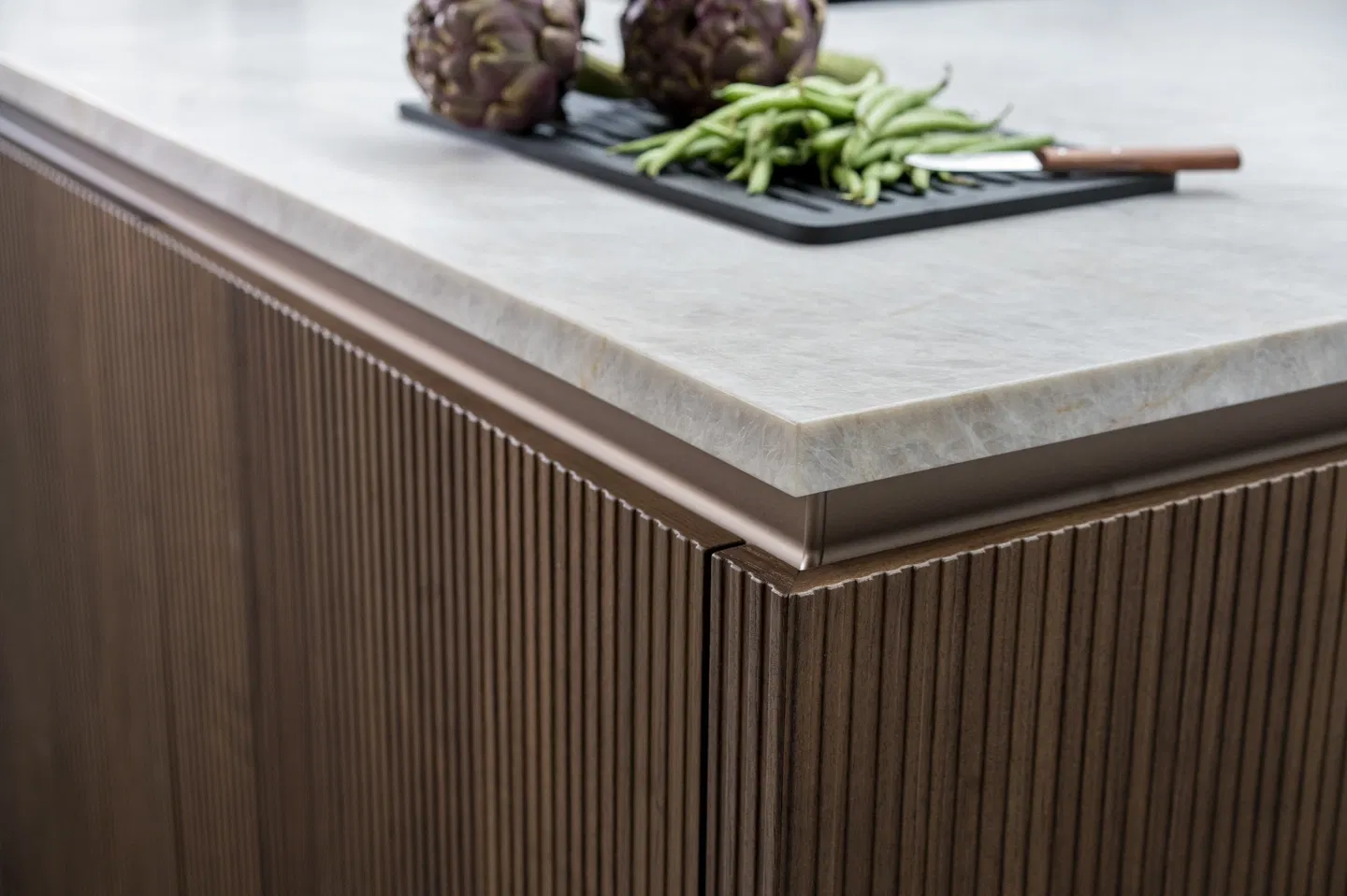
Slim 12–20mm worktops create a clean, architectural aesthetic and are commonly used within modern German kitchens.
Thicker 30–40mm surfaces introduce greater visual weight and often suit traditional kitchens, shaker cabinetry and more classic interior styles.
The decision should always be based on the overall design language rather than simply following current trends.
Kitchen Islands & Waterfall Worktops
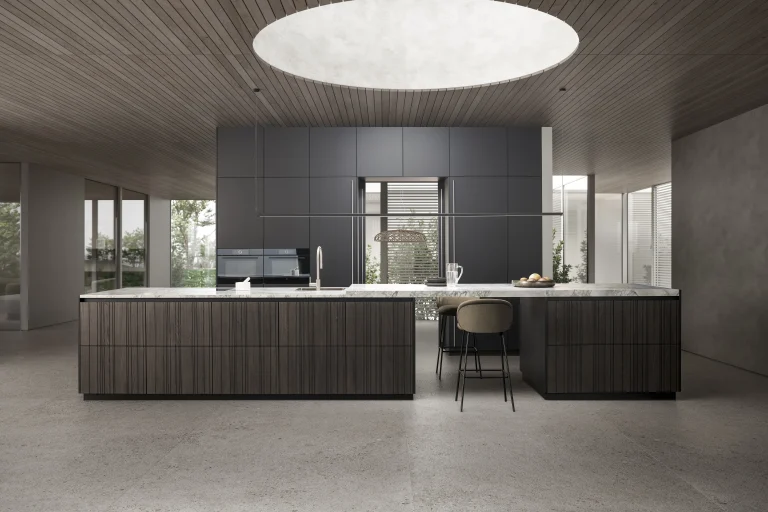
Kitchen islands have become the centrepiece of many luxury homes.
Because of this, the worktop often becomes one of the defining visual features within the entire room.
Large uninterrupted slabs, dramatic veining and waterfall ends can transform an island into a genuine statement piece.
When selecting a heavily veined material, it’s important to consider how the pattern flows across the surface and down any waterfall panels. Careful slab selection and fabrication can make a dramatic difference to the finished result.
How Much Do Luxury Kitchen Worktops Cost?
The cost of a kitchen worktop depends on far more than the material itself.
Factors that influence pricing include:
- Material selection
- Slab size
- Thickness
- Fabrication
- Cut-outs
- Edge profiles
- Splashbacks
- Waterfall ends
- Installation complexity
Rather than focusing solely on the price per square metre, it’s important to consider the complete installed cost.
For a broader understanding of kitchen budgets, our guide to How Much Does a Luxury Kitchen Cost? explains where worktops fit within the overall investment.
Common Worktop Buying Mistakes
After helping hundreds of homeowners design new kitchens, we’ve noticed several mistakes that are made time and time again.
The first is choosing a worktop purely from a small sample.
Large slabs often look completely different once installed, particularly materials with bold veining or natural movement.
The second is prioritising appearance over practicality.
A stunning surface that doesn’t suit the way you cook or maintain your kitchen can quickly become frustrating.
Finally, many homeowners underestimate how important fabrication quality is.
Even the most expensive material can look disappointing if joints, edges or cut-outs aren’t finished to a high standard.
Choosing an experienced kitchen designer and fabricator is just as important as selecting the material itself.
Caring for Your Kitchen Worktop
Whatever material you choose, proper care will help maintain its appearance for many years.
Simple habits such as using chopping boards, cleaning spills promptly and avoiding unnecessary impact will protect almost every worktop surface.
Some natural stones benefit from periodic sealing, while engineered materials typically require little more than routine cleaning with appropriate products.
Our guide to How to Maintain & Care for High-End Worktops & Tiles provides more detailed advice on looking after premium kitchen surfaces.
Final Thoughts
The best kitchen worktop is ultimately the one that complements both your lifestyle and the overall design of your home.
Quartz continues to be one of the most versatile all-round choices, while porcelain has become increasingly popular for contemporary kitchens thanks to its outstanding durability and refined appearance.
Natural materials such as granite, quartzite and marble offer individuality that engineered products simply cannot replicate, making them ideal for homeowners who value authenticity and character.
Rather than choosing a worktop in isolation, we always recommend considering it as part of the complete kitchen design. Cabinetry, lighting, flooring, appliances and worktops should work together to create a kitchen that feels balanced, functional and timeless.
If you’re planning a new kitchen, visiting our Kitchen Showroom in Surrey is one of the best ways to compare materials in person, explore different finishes and receive expert guidance on selecting the right worktop for your home.
Frequently Asked Questions
What is the most durable kitchen worktop?
Porcelain is generally regarded as one of the most durable kitchen worktop materials thanks to its excellent resistance to heat, stains, scratches and UV exposure. Quartz, granite and quartzite also offer excellent long-term durability.
Is quartz better than porcelain?
Neither material is universally better. Quartz offers exceptional consistency and low maintenance, while porcelain provides superior heat resistance and a slimmer contemporary appearance. The best choice depends on your design preferences and how you use your kitchen.
Which kitchen worktop requires the least maintenance?
Quartz and porcelain are among the easiest materials to maintain because they are non-porous and do not typically require sealing. Routine cleaning with suitable products is usually sufficient.
Do granite worktops need sealing?
Many granite worktops benefit from periodic sealing to help protect against stains and moisture. The exact maintenance requirements depend on the specific stone and finish selected.
Are marble worktops practical?
Marble can create a stunning luxury kitchen, but it requires more care than quartz or porcelain. Acidic foods and liquids may cause etching, and spills should be cleaned promptly to minimise staining.
How do I choose the right kitchen worktop?
Consider how you use your kitchen, your preferred design style, maintenance expectations and overall budget. Viewing full-size slabs alongside complete kitchen displays is often the best way to compare materials before making a final decision.


