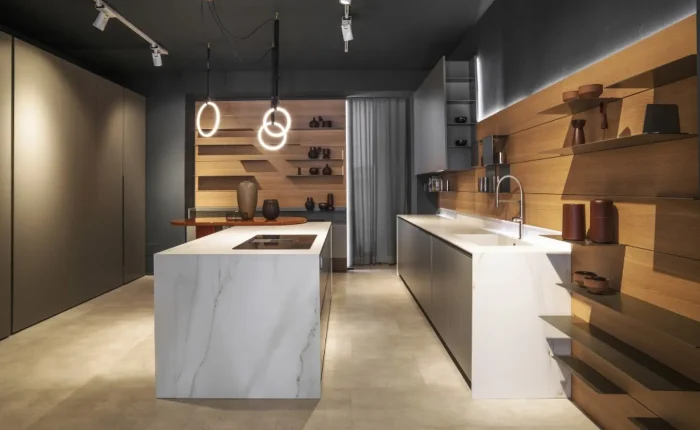
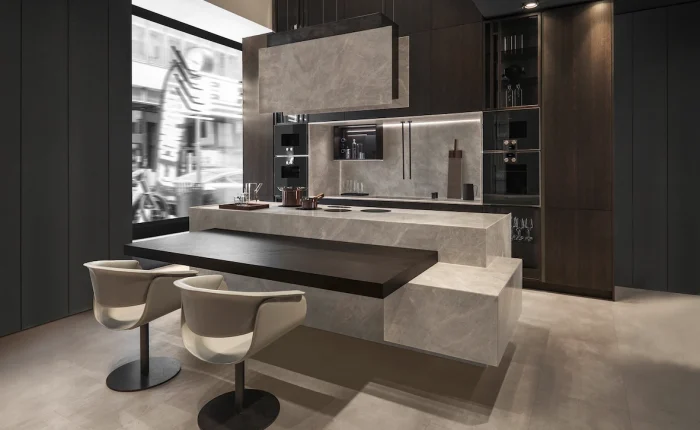
If you’re investing in a new kitchen, two design traditions rise above the rest: the engineered precision of German kitchens and the design flair of Italian kitchens. Both sit at the very top of the market, and both can be extraordinary. The honest answer to “which is better?” is that neither is — it depends entirely on how you live, what you value and the look you’re after.
At Brooklands Interiors we’re in the rare position of offering both under one roof: German kitchens by Leicht and Italian kitchens by Composit. That means we can guide you objectively, rather than steering you toward the only brand we happen to stock. Here’s how the two compare.
At a glance
| German (e.g. Leicht) | Italian (e.g. Composit) | |
|---|---|---|
| Best known for | Precision engineering & consistency | Design flair & individuality |
| Design character | Minimal, handleless, systemised | Expressive, characterful, styled |
| Customisation | Highly configurable within a system | Made-to-measure around your space |
| Finishes | Exacting, uniform, technical | Rich, tactile, catalogue-plus options |
| Feel | Faultless machine-made quality | Craftsmanship within manufacturing |
| Ideal for | Lovers of order & clean lines | Those wanting a statement kitchen |
Both are premium choices — the differences below are about character and fit, not one being “better” than the other.
The case for German kitchens
German kitchens have built their global reputation on engineering. Everything is designed as a precise, repeatable system: tight tolerances, robust cabinet construction, superb hardware and a level of consistency that’s hard to fault. If you value order, longevity and a flawless finish, this is your world.
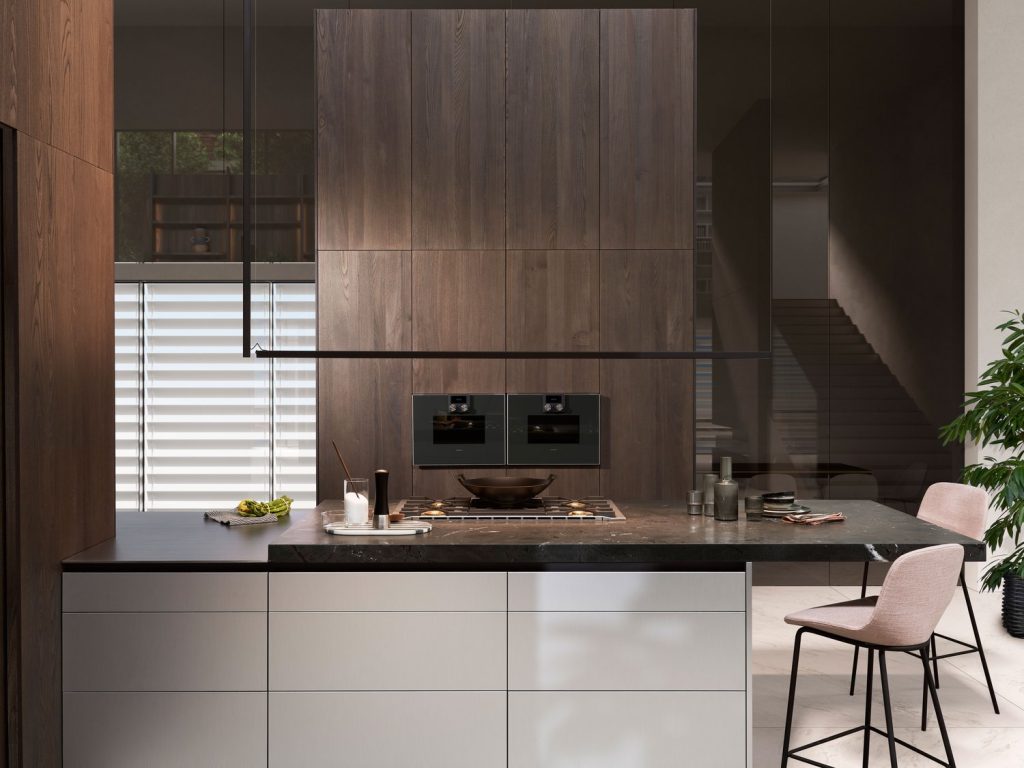
Where German kitchens excel
- Precision and consistency — every component is made to exact standards, so the fit and finish are impeccable
- Handleless minimalism — clean, uninterrupted lines are a German signature, ideal for contemporary interiors
- Functional intelligence — thoughtful ergonomics and hard-wearing mechanisms built for daily life
- Understated luxury — brands like Leicht let materials and proportion do the talking, without fuss
In short: a German kitchen is the choice of the perfectionist — someone who wants calm, ordered, precisely made spaces.
The case for Italian kitchens
Italian kitchens lead with design. There’s a confidence and warmth to Italian style — a willingness to be characterful — underpinned by a deep craftsmanship culture. Composit Italian kitchens are a good example: series-produced for quality and reliability, yet developed around each individual home, with an artisan’s heart inside a modern manufacturing process.
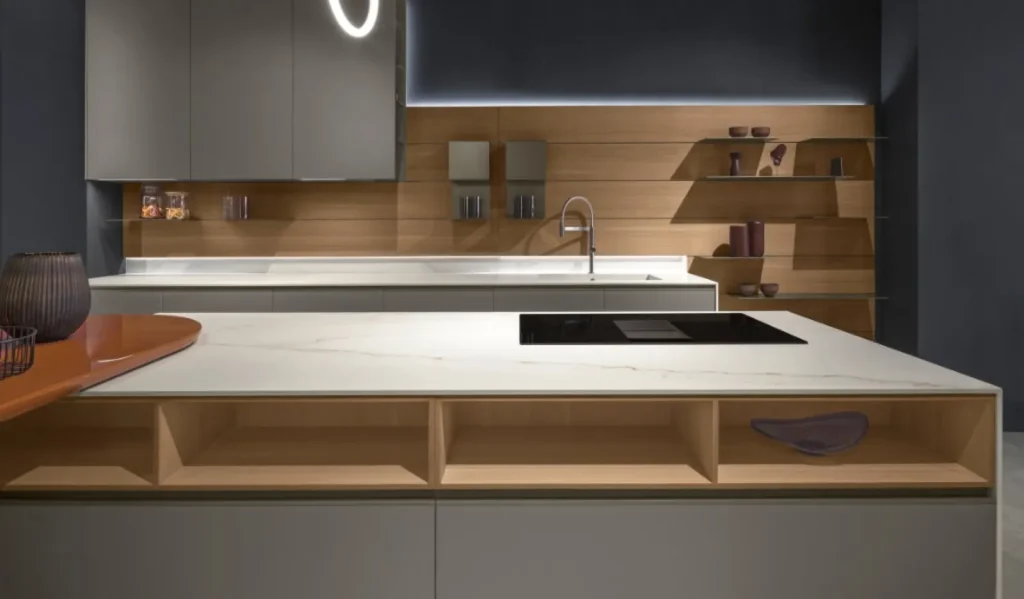
Where Italian kitchens excel
- Made-to-measure design — the kitchen is built around your space and habits, not the other way round
- Expressive finishes — rich wood veneers, matt and gloss lacquers, matt stone and brushed-metal accents, often extending beyond the standard catalogue
- Kitchen-into-living — Italian brands design cabinetry, living systems and wardrobes as one language, perfect for open-plan homes
- Character with substance — clever engineering (concealed pocket doors, space-maximising cabinets, quality German drawer runners) sits behind the style
In short: an Italian kitchen is the choice of the individualist — someone who wants their kitchen to feel personal and be a genuine statement.
How they compare, point by point
Design & aesthetics
German design tends toward restraint — minimal, geometric, handleless. Italian design allows more personality — warmer materials, bolder combinations and a more “designed” feel. If you want a kitchen that quietly disappears into a minimalist home, lean German; if you want it to be a talking point, lean Italian.
Customisation
Both are highly flexible, but in different ways. German kitchens offer huge configurability within a rigorously defined system. Italian kitchens like Composit take a made-to-measure approach, adapting layouts, dimensions and finishes around the room and how you use it — which can be a real advantage in period properties or unusual spaces.
Build quality & engineering
This is German territory by reputation, and deservedly so. But it’s worth knowing that premium Italian brands use the same top-tier components — Composit fits Blum Legrabox soft-close drawers as standard, for instance — so the gap in everyday quality is far smaller than the stereotype suggests.
Finishes & materials
German finishes are technical and uniform, executed to exacting standards. Italian finishes tend to be more tactile and varied, with a broader palette of woods, lacquers and stones — and often the option to go beyond the catalogue for something unique.
Price
Both are premium investments, and prices overlap heavily. Rather than one being cheaper across the board, cost is driven by the specific range, finishes, appliances and worktops you choose. We’ll always give you clear, upfront pricing so you can compare like for like.
So, which should you choose?
A few honest questions to help you decide:
- Do you love order and clean, handleless lines? Lean German.
- Do you want warmth, character and a statement space? Lean Italian.
- Is your home open-plan, with kitchen flowing into living? Italian ranges shine here.
- Is faultless, machine-made consistency your top priority? German is hard to beat.
The truth is, the “right” kitchen is the one that suits how you live — and the surest way to feel the difference is to stand in front of both.
See both, side by side. Compare Leicht and Composit at our two-floor Surrey showroom — book a free design consultation today.
Frequently asked questions
Are German or Italian kitchens better quality?
Both are premium, and at the top end the quality gap is minimal. German kitchens are renowned for engineering consistency, while premium Italian kitchens combine craftsmanship with the same high-grade components — the real difference is design character, not durability.
Are Italian kitchens more expensive than German ones?
Not necessarily. Prices overlap heavily and depend far more on the range, finishes, appliances and worktops you choose than on the country of origin.
Which is better for a modern open-plan home?
Italian ranges such as Composit’s Lounge collection are designed to unify kitchen and living spaces, which suits open-plan homes especially well. German handleless designs also work beautifully in minimalist open-plan settings — it comes down to the look you prefer.
Where can I see German and Italian kitchens near me in Surrey?
You can compare Leicht (German) and Composit (Italian) kitchens in person at the Brooklands Interiors showroom, 119–121 Oyster Lane, Byfleet, Surrey KT14 7JW — within easy reach of Weybridge, Cobham and Oxshott.